AirTags On Pets
Shawn Dienhart, June 2025
I wrote this article from my direct experience and research wihile attempting to locate a missing dog that was wearing an Airtag on its collar. The technology and protocol of the AIrTag system is more complex and sometimes mis-leading to consumers that may not understand how they work.
AirTags: What I Learned About Them During a Search For a Lost Dog in the Wilderness
In May 2025, I spent two weeks searching for a lost terrier mix named Sailor in the rugged terrain of southern Monterey County, California. Though the efforts to find her alive ended in heartbreak, the experience taught me lessons about the Apple AirTag system applicable to lost pet recovery.
The Disappearance
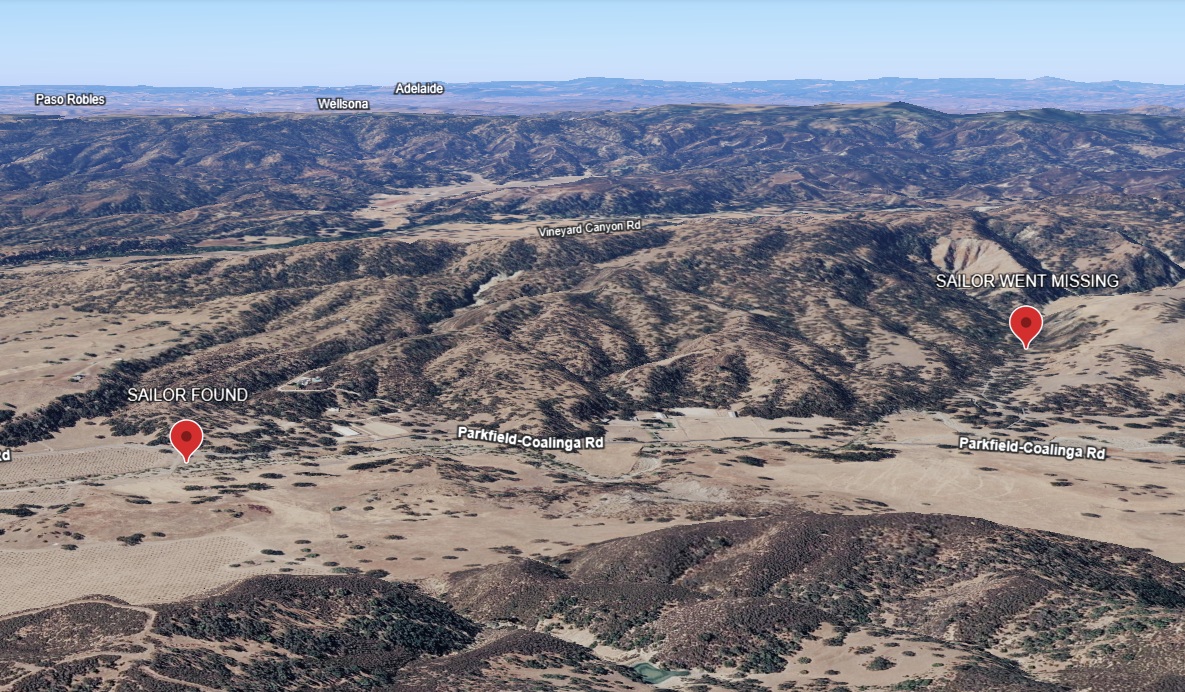
Sailor, a 12-pound terrier mix, went missing late at night during a group gathering at a remote ranch near Parkfield, California. She had a collar with a license tag, a name tag, and an Apple AirTag. Despite frantic search efforts by the group over the next couple of days, there were no sightings and no AirTag signal as attempted by its owner using an iPhone. Dense wilderness, minimal water sources, and the lack of cell service complicated the efforts.
I was contacted four days after Sailor went missing and asked to conduct a search. Extensive foot and drone sweeps and reaching out to the local community resulted in zero sightings of Sailor over the next ten days.
The AirTag Ping
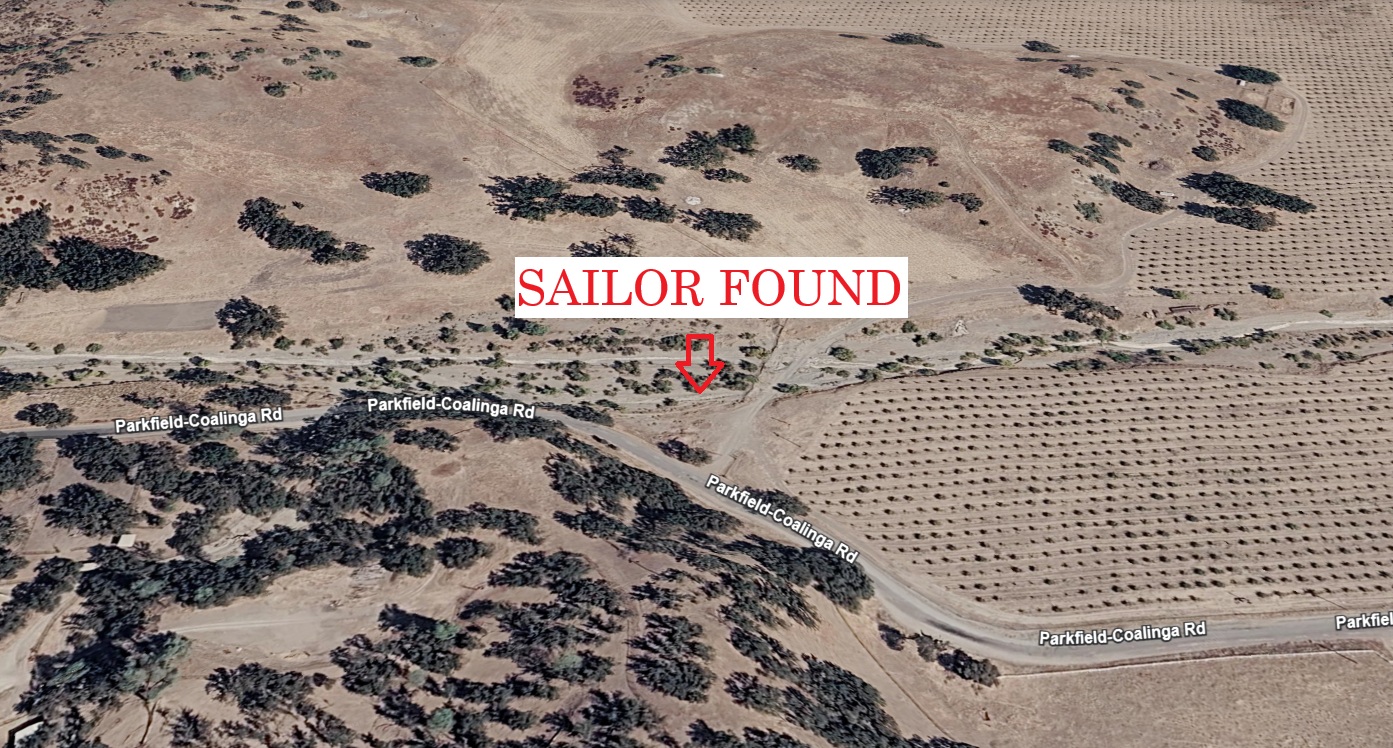
Then, on June 1, Sailor's owner received an AirTag notification. Someone, likely ranch worker, had unknowingly passed near Sailor’s remains with an iPhone, which triggered a ping. The ping wasn't sent to the iCloud until that phone returned to a cell coverage area a couple of hours later. Then the AirTag location was transmitted and Sailors owner received the spcific location of the AirTag. Sadly, we arrived to learn Sailor had already passed, likely a day or two after she went missing as determined by her advanced decomposition. Her remains were found in a dry riverbed about 100 feet off the nearby road, just over a mile from where Sailor went missing. Sailors collar was intact around her neck and all of her tags, including the AirTag, were under her remains.
Remarkable Oddshe went missing. The collar and tags were intact, but under her neck and not facing skyward.
It struck me that the odds of the ping being received by the passing rancher are remarkable, given the protocol of the AIrTag (see below), and the chance of a rancher passing by in close enough proximity to pick up the weak bluetooth signal from the AirTag.
AirTag Beaconing Protocols
When an AirTag is separated from its owner's iPhone for an extended period, it continues to beacon using Bluetooth Low Energy (BLE) to allow its location to be picked up by nearby Apple devices on the Find My network but interval of the beaconing changes based on conditions.
During Sailors plight, her AirTag had gone through four beaconing protocols, 1) nearby State 2) moving AirTag, 3) stationary AirTag, and 4) disconnected state.
Beaconing Frequency: The timing of the beaconing signal depends on whether the AirTag is moving or not and proximity to the owners phone using four separate protocols. Any nearby Apple device can relay those to the Find My network.
1. Stationary AirTag: If the AirTag is near the owners iPhone and is not moving, it sends a beacon approximately every 15 minutes. This less frequent beaconing helps conserve battery life.
2. Moving AirTag: If the AirTag detects movement, it beacons more frequently.
3. Nearby State: Immediately after losing connection with the owner's device, the AirTag enters a "nearby" state and transmits an incomplete BLE packet
every two seconds. This prevents other devices from uploading its location while it's still searching for its owner.
4. Disconnected State: If it remains separated from its owner, the AirTag sends a ping every 3 to 5 minutes, allowing other devices within range to update its
location on the Find My network. Typical range to receive a ping is 50 feet (100 feet under ideal cobditions). After 3 days away, the AirTag may play a sound
periodically.
Conclusions
AirTags work, but not always when you need them most
In areas without cellular service or regular foot traffic, the devices can’t relay location until another iPhone comes within range and later connects to the network.
Positioning matters
Sailor’s AirTag was under her body, not facing the sky. It reduced the likelihood of an earlier ping.
Delayed signals still matter
Even after death, the AirTag gave closure by allowing Sailor to be found. However, Sailor’s AirTag likely would have pinged the ranchers phone days earlier if the disconnected state beaconing was more frequent. The odds of picking up the beacon sent once every 3 to 5 minutes would be extraordinary in a backcountry environment.
AirTags should be the last choice when selecting a tracking device for a pet
The multiple modes, timing of beacons, limited Bluetooth range become ineffective and confusing information when you need it the most.